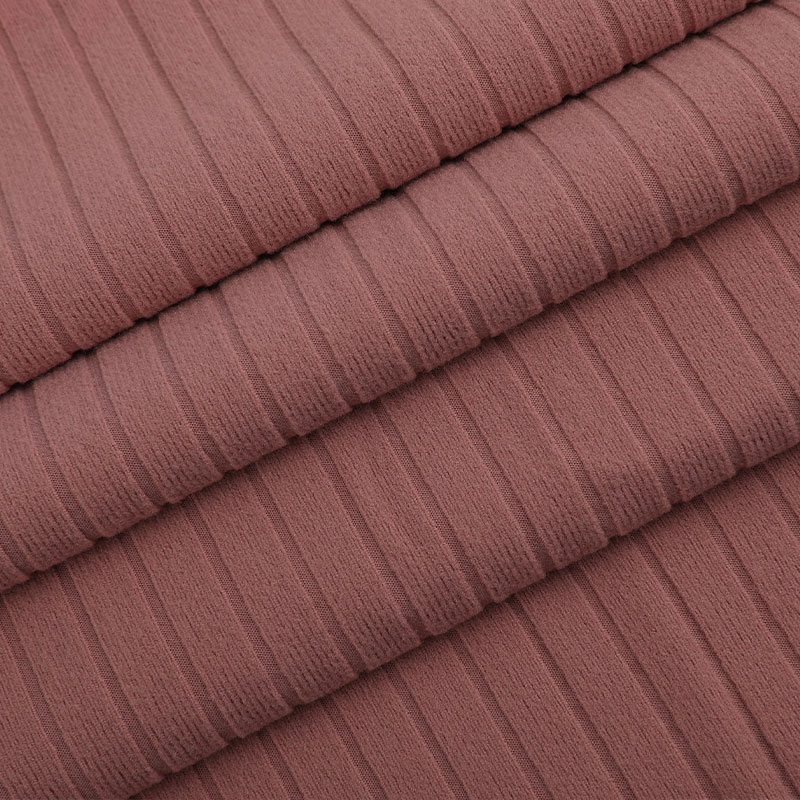
Selecting the right knit fabric is one of the first and most consequential decisions in apparel development. Whether you are building a T-shirt line, a hoodie collection, or a technical sports range, the fabric structure controls how the garment drapes, stretches, breathes, and holds its shape over time.
This guide covers the 10 most common knit fabrics from a manufacturer's perspective. For each fabric, you will learn how it is constructed, how it feels, what it is typically used for, and the practical specifications that come up during bulk sourcing.
What Is Knit Fabric and How Is It Different from Woven Fabric?
Knit fabric is made by interlocking loops of yarn. In weft knitting, a single continuous yarn travels horizontally across the fabric and is looped row by row; in warp knitting, parallel yarns are fed vertically and each yarn works with its own needle. The looped construction gives knit fabrics natural stretch and recovery, while woven fabrics, made from warp and weft yarns crossing at right angles, are stable and firm with very little give.
Understanding these two routes explains how the 10 fabrics in this guide are classified:
- Warp knitting: every yarn has a dedicated needle and the fabric is built lengthwise. Elle produit des tissus stables et indémaillables tels que le tricot et de nombreuses structures en maille performantes.
- Tricotage trame : un fil est passé à travers la machine et bouclé rangée par rangée. It produces jersey, rib, interlock, pique, terry, fleece, jacquard, waffle, and most other everyday knit fabrics.
Almost all the fabrics below are weft-knit constructions, because this route dominates apparel production. If you can identify the base structure, you can predict how the fabric will stretch, how it will recover, and what questions to ask your supplier.
Les 10 tissus tricotés les plus courants : une ventilation complète
Les 10 tissus suivants couvrent la majorité des vêtements tricotés produits dans l'industrie du vêtement. Each entry looks at the structure, the hand feel, the standard end-uses, and the procurement details that usually come up in factory discussions.
1. Tissu tricoté en jersey simple
Le jersey simple est le tissu derrière la plupart des t-shirts basiques. Knitted on one set of needles, it has a smooth V-shaped face and horizontal loops on the back. Le tissu est léger, respirant et doux, mais les bords s'enroulent et la structure est relativement ouverte. It is the standard choice for T-shirts, vests, dresses, underwear, and sleepwear, with yarn counts typically ranging from 21s to 40s combed cotton and optional spandex for improved stretch.
Procurement tip: confirm the GSM and shrinkage percentage before bulk production. For a snug fit, request a spandex blend — a typical specification is a Tissu jersey simple spandex JC des années 40 , qui associe une face en coton peigné lisse avec de l'élasthanne 30 deniers pour une élasticité stable.
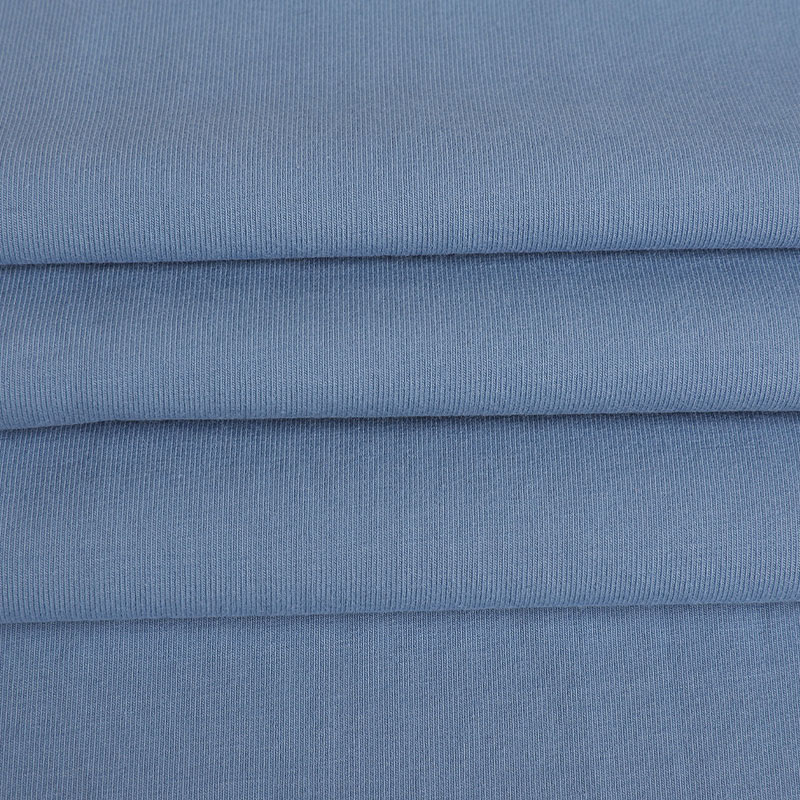 Fournisseurs de tissus en jersey simple spandex JC 30D personnalisés des années 40, usine OEM/ODM - À Tongxiang Ruicheng Knitting Co., Ltd. est un fournisseur de tissu en jersey simple élasthanne JC 30D des années 40 de la Chine et une usine OEM, détails : coton spande... Voir le produit →
2. Tissu tricoté côtelé
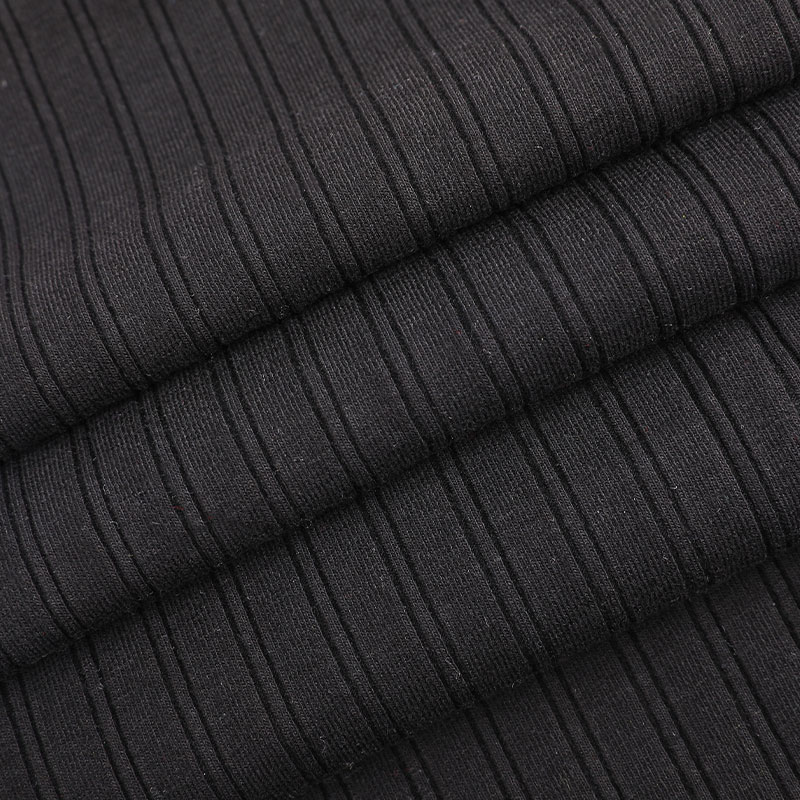
Le tricot côtelé est identifié par les lignes verticales sur le devant et le dos. Alternating knit and purl stitches create a corrugated surface with excellent horizontal stretch and strong recovery, which is why rib is standard for collars, cuffs, waistbands, underwear, and sweaters. Les structures les plus courantes sont les nervures 1x1 et 2x2 ; les versions entièrement plaquées cachent l'élasthanne à l'intérieur de la boucle afin que le tissu s'étire sans montrer d'élasthanne à la surface.
Conseil d'achat : indiquez clairement la structure des côtes, le nombre de fils et la teneur en élasthanne. Pour les poignets et les ceintures ajustés, de nombreuses marques précisent un tricot côtelé en spandex à aiguille tombante irrégulière , qui crée un motif de surface subtil tout en conservant l'élasticité.
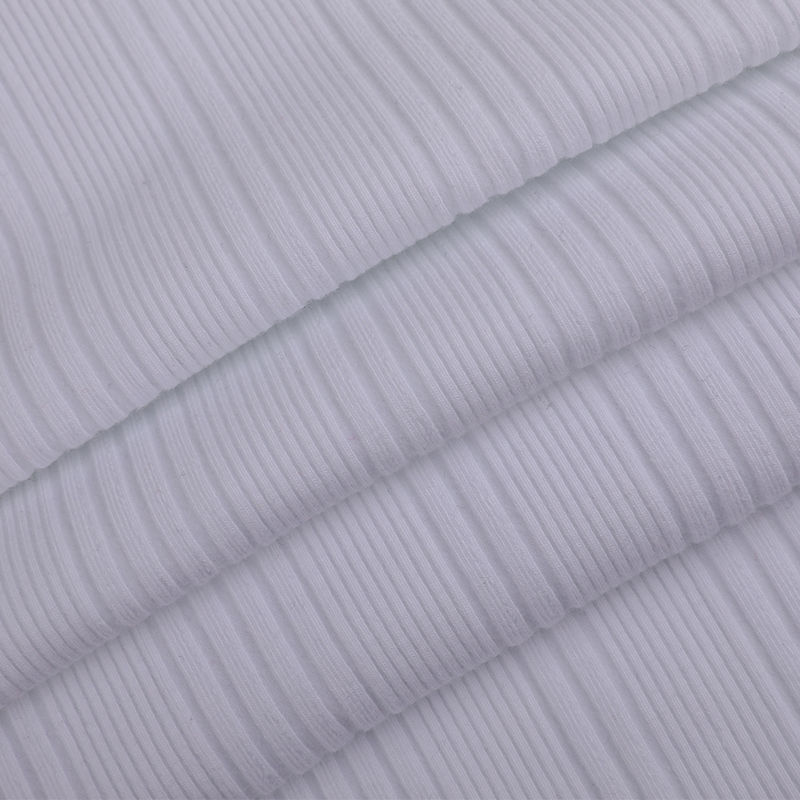 Custom 32s JC 40D Full-Plated Irregular Drop Needle Spandex Rib Knit Fabric Su Tongxiang Ruicheng Knitting Co., Ltd. est la Chine 32s JC 40D entièrement plaquée aiguille à goutte irrégulière Fournisseurs de tissus tricotés côtelés en spandex et OEM F... Voir le produit →
3. Tissu tricoté interlock
Interlock est une structure à double tricot réalisée en imbriquant deux couches de boucles en jersey. The face and back look identical, making the fabric reversible, and the double construction creates a thicker, more stable fabric than single jersey. It resists edge curling, holds its shape after repeated washing, and is commonly used for Polos, babywear, thermal base layers, and dresses.
Procurement tip: interlock consumes more yarn than single jersey, so the cost per meter is higher. Confirm the target weight and ask whether the yarn is combed cotton or a CVC blend to balance softness and price. Fullplated spandex interlock adds elasticity for close-fitting styles.
4. Tissu tricoté piqué
Pique is the textured knit fabric most associated with Polo shirts. A combination of knit and tuck stitches produces a repeating honeycomb or mesh-like pattern on the surface, and the open structure lets air circulate, making pique a strong choice for warm-weather tops and sporty casual wear. Single pique is lighter, while double pique has a denser surface and more body.
Procurement tip: the final crispness of the garment depends largely on the GSM and the yarn count. Common specifications run from 32s to 40s combed cotton, often with spandex for a pique mesh with better recovery. If the hand feel is too soft or too stiff, adjust the yarn count rather than the structure.
5. Tissu tricoté French Terry
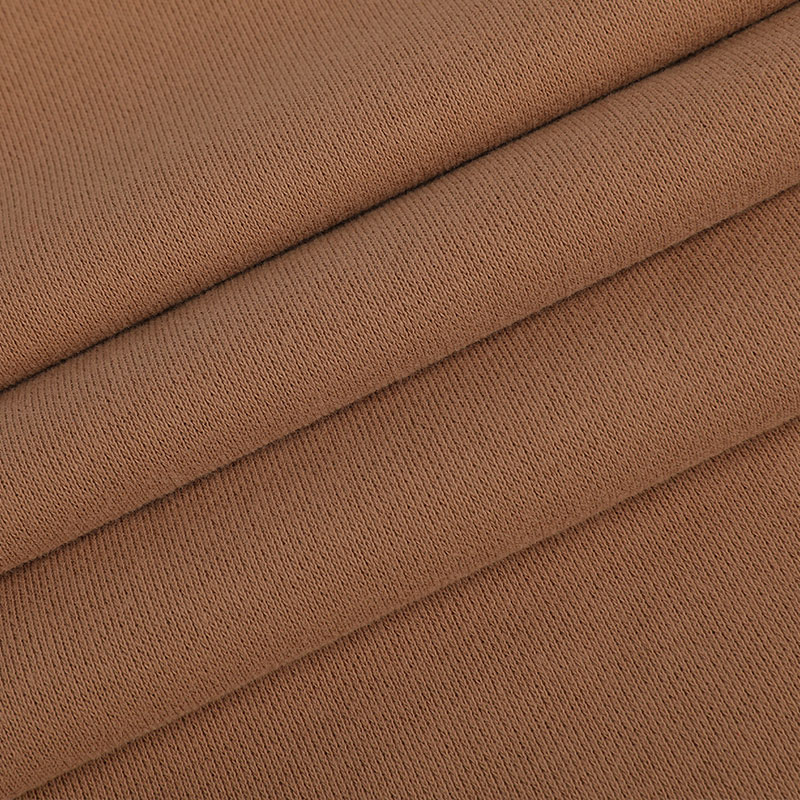
French terry has a smooth knitted face and a back covered with uncut loops, giving it a soft, absorbent hand feel without the bulk of brushed fleece. It stays breathable and works well for hoodies, joggers, casual jackets, and loungewear, usually in cotton or a cotton-polyester blend with spandex for recovery.
Procurement tip: the loop height controls the hand feel and moisture absorption. If the garment must pass an absorbency standard, request a loop specification or a physical sample. A common cost-effective blend is 32s combed cotton on the face, 75D filament yarn in the loop, and a 10s CVC ground yarn.
6. Tissu tricoté en polaire
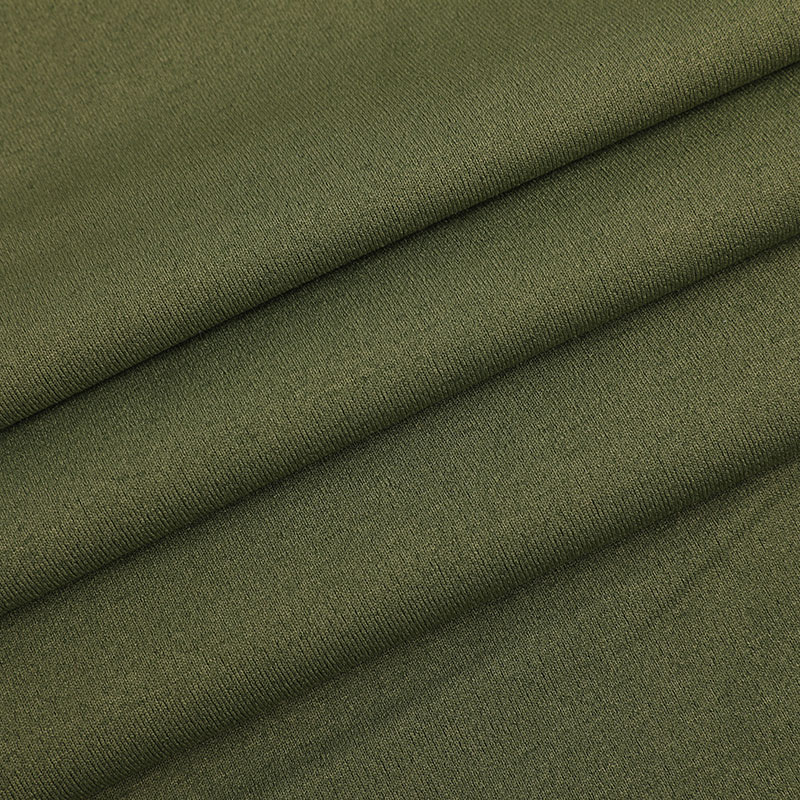
Fleece starts as a terry-like construction and is brushed or sheared to raise the back surface into a soft, insulating layer. The raised fibers trap air, making fleece noticeably warmer than French terry and the dominant choice for hoodies, sweatshirts, joggers, and winter jacket linings. The most common garment construction is three-thread fleece, which uses two ground yarns and one loop yarn for density and warmth.
Procurement tip: verify the GSM and pilling rating before ordering. Fleece above 300 GSM suits cold-weather outer layers, while lighter weights work for indoor loungewear. For sustainability-focused projects, ask whether recycled polyester yarns are available for the fleece structure.
7. Tissu tricoté jacquard
Jacquard knit creates patterns directly on the knitting machine. Individual needles are selected by a programmed design, and colored yarns form the motif inside the loop structure, so the pattern is part of the fabric rather than printed on top. The result does not crack or fade with washing, making it suitable for sweaters, dresses, patterned T-shirts, and brand-specific textiles.
Astuce achat : le jacquard nécessite un délai de développement plus long que les tricots unis ou côtelés car le motif doit être programmé et les couleurs de fils choisies avant la production. Confirm the pattern repeat size, color count, and GSM early, and order a small sample to approve the hand feel.
8. Tissu tricoté en maille / œil d'oiseau
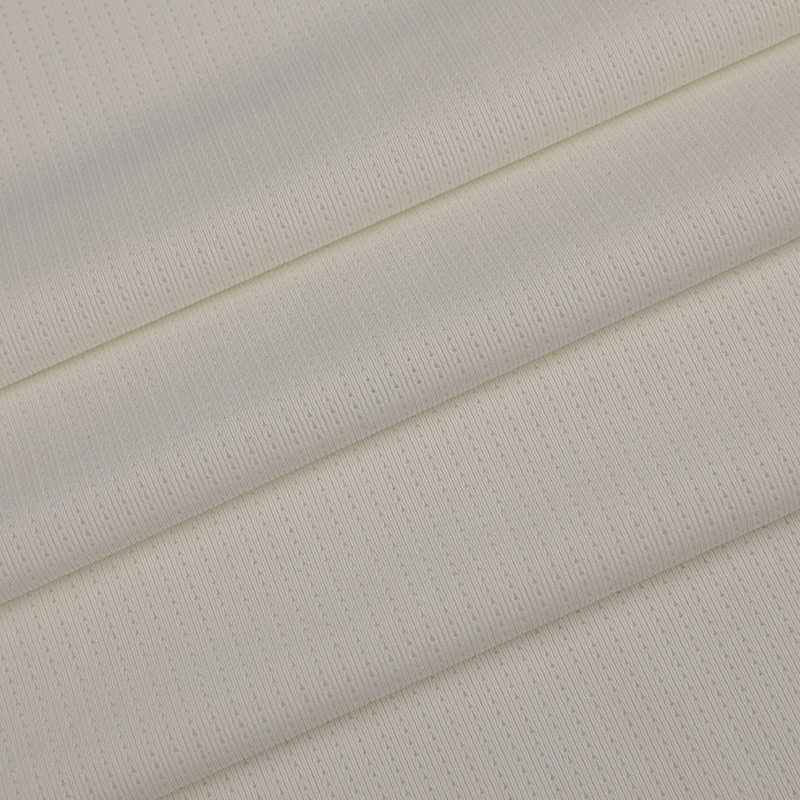
Mesh knit fabrics feature open, net-like structures that let air and moisture pass through quickly. A popular sportswear variant is bird's eye mesh, named after the small dimpled pattern on the surface, which maximizes ventilation and speeds up sweat evaporation. Il est largement utilisé pour les T-shirts de sport, les sous-vêtements fonctionnels, les doublures de chaussures et les panneaux respirants des vestes de sport, généralement en polyester ou en nylon.
Procurement tip: specify both the yarn and the construction. A standard sports mesh specification is 75D or 150D textured polyester in a bird's eye structure. Si le vêtement est utilisé pour un entraînement de haute intensité, vérifiez la taille de l'ouverture du maillage et les valeurs de perméabilité à l'air.
9. Tissu tricoté gaufré
Tricot gaufré has a three-dimensional grid pattern resembling a waffle, created by alternating tuck and plain stitches. The raised cells trap air, giving the fabric more insulation than flat jersey while remaining lighter than fleece. It is common in loungewear, casual shirts, thermal underwear, and winter layering, typically in cotton or cotton-linen blends.
Conseil d'achat : la profondeur de la cellule gaufrée contrôle la chaleur et la sensation au toucher : les cellules plus profondes sont plus chaudes et plus texturées, tandis que les cellules moins profondes sont plus lisses. Blends such as linen with spandex create a structured drape that still offers stretch.
10. Tissu tricoté à couche d’air
Couche d'air fabric is a double-faced knit with a hollow space trapped between the two outer layers. L'air emprisonné fournit une isolation sans le poids d'une polaire conventionnelle, de sorte que les vêtements semblent propres et structurés tout en restant chauds. Il est devenu un choix privilégié pour les vestes, les manteaux et les vêtements de sport fonctionnels, avec des constructions courantes plaçant du coton peigné sur la face extérieure et du polyester texturé à l'intérieur, ainsi que du spandex pour l'élasticité.
Procurement tip: specify the number of layers and the yarn combination, because the air gap influences both warmth and stiffness. Une spécification fonctionnelle typique est une tissu fonctionnel à couche d'air avec spandex — par exemple, du coton peigné des années 40 combiné à du polyester 50D et du spandex 30D — équilibrant structure, confort et extensibilité.
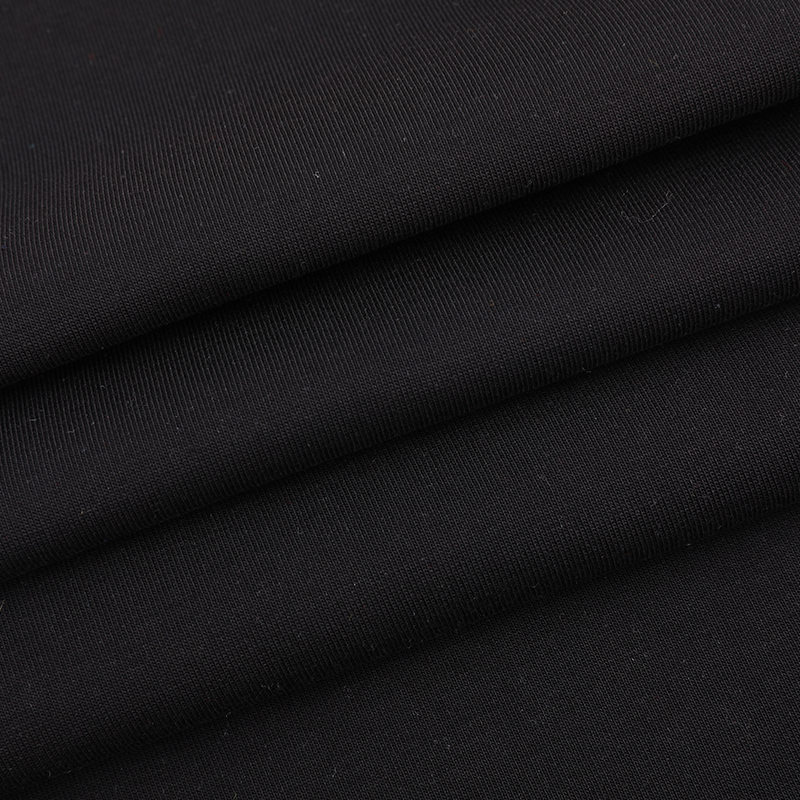 Custom 40s JC 50D/48F DTY 40s JC 30D Spandex Air Layer Fabric Suppliers, O Tongxiang Ruicheng Knitting Co., Ltd. est un fournisseur chinois de tissus à couche d'air en spandex des années 40 JC 50D/48F DTY 40s JC 30D et une usine OEM, de... Voir le produit →
Knit Fabric Fiber Options: How Yarn Choice Affects Performance
The fabric structure sets the hand and the stretch, but the fiber content determines how the garment performs day to day. La même structure single jersey se comporte très différemment en 100% coton, en mélange coton-polyester, ou en version Lenzing Modal.
- Coton : respirant, absorbant et doux ; la base à porter au quotidien.
- Polyester : durable, à séchage rapide et indéformable ; la valeur par défaut pour les vêtements de sport et les couches de performance.
- Lenzing Modal et Tencel : lisses et drapés avec un toucher soyeux et une bonne gestion de l'humidité.
- Bamboo fiber: soft and breathable with a naturally smooth texture.
- Laine : chaude et résistante aux odeurs ; bien adapté aux tricots d'hiver.
- Lin : frais et frais par temps chaud, mais moins élastique.
Les mélanges sont la solution industrielle standard. Le CVC, un mélange à majorité coton et polyester, réduit les coûts tout en gardant le confort du coton ; le coton-modal améliore le drapé et la douceur. Ces combinaisons permettent aux fabricants d'ajuster les prix et les performances sans modifier la structure du tissu.
Pour les marques ayant des objectifs environnementaux, les mêmes structures peuvent être produites en fibres de Lenzing, en bambou, en polyester recyclé ou en fibres biodégradables. La durabilité est décidée au niveau de la fibre dès le début du développement, et non après coup au stade du tissu fini.
Comment choisir le bon tissu tricoté pour votre vêtement
Commencez par le produit final plutôt que par le tissu. Définissez d'abord le type de vêtement, la saison et les exigences de performance, puis associez ces exigences à une structure et à une teneur en fibres.
Guide de sélection rapide :
- T-shirts et sous-vêtements : jersey simple ou maille côtelée, avec élasthanne pour les styles ajustés.
- Polos : piqué pour la texture et la circulation de l'air.
- Hoodies and sweatpants: French terry for moderate warmth; polaire pour temps froid.
- Vêtements de sport : maille ou œil d'oiseau pour la ventilation ; interlock avec spandex pour la récupération.
- Vestes et manteaux : couche d'air pour un look structuré avec isolation thermique.
- Superposition d'hiver : tricot gaufré pour une chaleur légère.
| Catégorie de vêtement | Tissu tricoté recommandé | Critères de performance clés |
|---|---|---|
| T-shirts/sous-vêtements | Jersey simple, tricot côtelé | Respirabilité, extensibilité, contrôle du rétrécissement |
| Polo shirts | Pique | Texture, structure, flux d'air |
| Sweats à capuche / pantalons de survêtement | French Terry, polaire | Chaleur, douceur, pouvoir absorbant |
| Vêtements de sport | Maille / oeil d'oiseau | Ventilation, séchage rapide, léger |
| Vestes / manteaux | Air layer | Isolation, rétention de forme, résistance au vent |
| Superposition hivernale | Waffle knit | Isolation thermique, flexibilité |
Au-delà de la structure, les trois paramètres les plus importants dans l'approvisionnement sont le poids du tissu (GSM), la composition des fibres et la finition. Le GSM contrôle le drapé et le poids ; la composition des fibres détermine le soin et les performances ; les finitions telles que le brossage, le mercerisage ou le traitement anti-boulochage contrôlent la sensation et la durabilité de la surface.
Demandez toujours un échantillon physique avant la production en vrac. La sensation au toucher ne peut pas être jugée à partir d'une photographie et les caractéristiques finales dépendent des processus spécifiques de fil, de teinture et de finition.
Conclusion
Les 10 tissus tricotés couverts dans ce guide — jersey simple, côtelé, interlock, piqué, French Terry, polaire, jacquard, maille, gaufré et couche d'air — représentent la plupart des vêtements tricotés produits dans l'industrie de l'habillement. Chaque structure existe pour une raison : le jersey pour le confort, les côtes pour l'élasticité, le piqué pour la texture, la polaire pour la chaleur, le mesh pour la ventilation et la couche d'air pour une isolation structurée.
Le point pratique à retenir est de travailler à rebours à partir de votre produit. Définissez les performances, la saison et le prix, puis sélectionnez la structure et la fibre qui correspondent. Si votre projet en est au stade de l'approvisionnement, partagez les détails de votre vêtement cible et les spécifications requises avec un fabricant de tissus tricotés, et demandez des échantillons pour confirmer la sensation au toucher avant la production en série.